
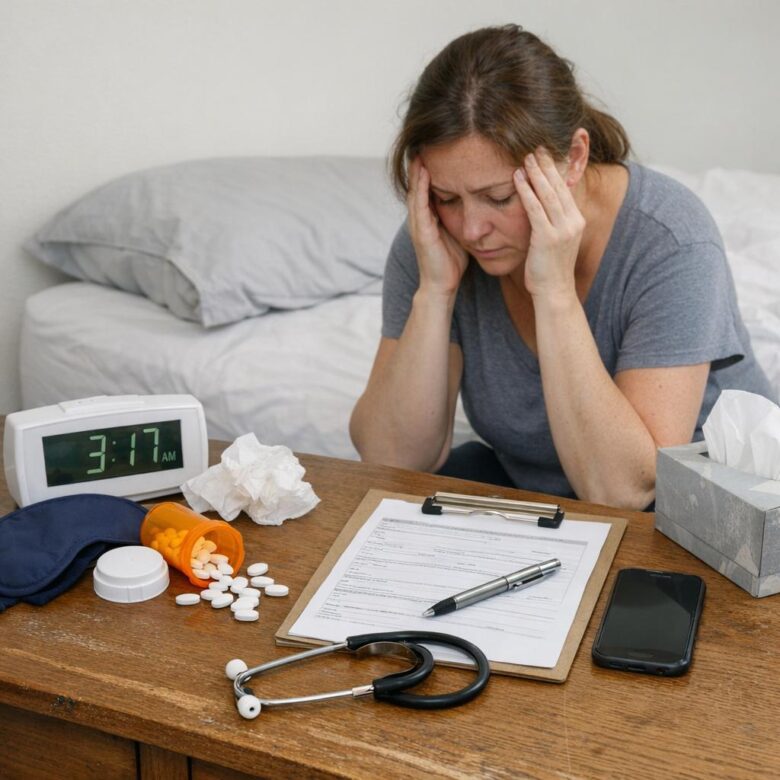
This guide is designed to help you decide whether a sleep problem can be monitored briefly, deserves a scheduled medical evaluation, or creates an immediate safety concern. It is not a guide to diagnosing yourself or choosing a treatment.
A poor night of sleep after travel, illness, noise, stress, or a disrupted schedule is common. The situation becomes more important when symptoms recur, continue despite adequate opportunity to sleep, impair daytime functioning, or involve breathing pauses, unintended sleep, unusual movements, injuries, or major changes in mood or behavior.
The key question is not simply “How many hours did I sleep?” Consider what happens during sleep, how alert and safe you are during the day, how long the pattern has continued, and whether another person has observed symptoms you cannot detect yourself.
Monitor briefly
A few difficult nights have a clear temporary cause, symptoms are mild, and you remain able to function safely.
Arrange an evaluation
Symptoms are frequent, persistent, worsening, unexplained, or affecting concentration, mood, work, school, relationships, or health.
Act immediately
Breathing, alertness, behavior, mental health, medication exposure, or nighttime activity creates an immediate risk of serious harm.
Match the symptom to the next sensible step
| Pattern | Clues to notice | When to seek help |
|---|---|---|
| Difficulty falling or staying asleep | Long periods awake, early waking, repeated awakenings, frustration about sleep, or impaired concentration and mood the next day. | Schedule an evaluation when it becomes frequent or disrupts daily life. Chronic insomnia is generally defined using a benchmark of at least three nights a week for three months, but you do not need to wait three months when symptoms are severe. |
| Snoring or interrupted breathing | Loud snoring, witnessed pauses, gasping, choking, dry mouth, morning headache, repeated nighttime urination, or significant daytime sleepiness. | Discuss witnessed pauses or gasping with a healthcare professional. Snoring alone does not establish sleep apnea, and some people with sleep apnea may not recognize their own nighttime symptoms. |
| Urge to move the legs | Uncomfortable crawling, pulling, aching, tingling, or restless sensations that begin during rest, worsen in the evening, and improve temporarily with movement. | Seek an evaluation when symptoms repeatedly delay sleep or disturb daytime function. Medication effects, pregnancy, kidney disease, and low iron may be relevant. Do not start high-dose iron based only on symptoms. |
| Sleep at the “wrong” time | You sleep reasonably well on your preferred schedule but cannot align sleep with work, school, rotating shifts, or required wake times. | Ask for help when the mismatch is persistent or creates drowsy-driving, workplace, attendance, or health problems. |
| Unintended daytime sleep | Dozing during conversations, meals, meetings, or driving; overwhelming sleep episodes; sleep paralysis; dreamlike experiences around sleep; or sudden muscle weakness triggered by emotion. | Seek prompt assessment. These symptoms may reflect insufficient sleep, medication effects, sleep apnea, narcolepsy, or another condition. Avoid driving when you are struggling to remain awake. |
| Unusual behavior during sleep | Walking, eating, leaving the bed, screaming, striking someone, acting out dreams, confusion, or waking with unexplained injuries. | Arrange an evaluation when episodes are new in adulthood, recurrent, violent, associated with injury, or begin after a medication or substance change. |
Sleepiness and fatigue are not quite the same
Sleepiness
Sleepiness means difficulty staying awake or a tendency to doze. It is especially concerning during driving, safety-sensitive work, conversations, or other activities that normally require alertness.
- Head nodding or heavy eyelids
- Unplanned naps or brief “microsleeps”
- Missing part of a journey or conversation
- Needing constant stimulation to remain awake
Fatigue
Fatigue is a lack of physical or mental energy. A person may feel exhausted but not be able to fall asleep. Fatigue can accompany sleep disorders, but it can also be related to pain, infection, anemia, thyroid problems, mood disorders, medication effects, and other conditions.
- Low energy without unintended dozing
- Reduced stamina or motivation
- Mental fog or feeling depleted
- Symptoms that do not improve after adequate sleep
This distinction can help during an appointment. Saying “I fall asleep without intending to” provides different information from saying “I feel drained but cannot sleep.”
When the situation is urgent
Do not drive or operate dangerous equipment if you are fighting sleep, having unintended sleep episodes, or cannot maintain attention. Arrange safer transportation rather than relying on caffeine, open windows, or loud music.
Contact emergency services for severe breathing difficulty, blue or gray lips, chest pain, fainting, sudden confusion, a suspected overdose, inability to wake someone normally, serious injury, or behavior that creates an immediate danger.
Thoughts of suicide or harming another person require immediate support. In the United States, call or text 988. Call 911 when there is immediate danger. Outside the United States, use your local emergency or crisis service.
Medication-related sleep changes
Prescription medicines, nonprescription sleep products, antihistamines, supplements, alcohol, cannabis, stimulants, and other substances can affect alertness, breathing, sleep timing, leg symptoms, and nighttime behavior. The timing of a new symptom matters: note whether it began after a medicine was started, stopped, or adjusted.
Do not stop, increase, decrease, combine, or change the timing of trazodone or another prescribed medicine based on this article. Contact the prescriber or a pharmacist about troublesome daytime drowsiness, dizziness, falls, agitation, unusual behavior, breathing concerns, or possible interactions. Seek urgent help for a suspected overdose or severe reaction.
What a professional evaluation may involve
An appointment does not automatically lead to an overnight laboratory study. A primary care professional may begin with your sleep schedule, symptoms, health history, medication list, substance use, mood, pain, breathing, and daytime alertness. Depending on the pattern, the next step may include blood tests, a sleep diary, activity monitoring, referral, or a sleep study.
A home sleep apnea test is intended for selected people when ordered as part of a medical assessment. It does not evaluate every sleep disorder, and automatically generated results should not be treated as a complete diagnosis. Likewise, watches and phone apps may provide useful observations but cannot reliably confirm or exclude insomnia, sleep apnea, narcolepsy, or abnormal nighttime behavior.
Prepare useful information for an appointment
Frequently asked questions
Should I wait several weeks before asking for help?
Not when symptoms affect safety, breathing, alertness, or mental health. For a mild problem with a clear temporary cause, brief monitoring may be reasonable. Arrange an appointment when the problem persists, recurs, worsens, or interferes with daytime life.
Does sleeping eight hours rule out a sleep disorder?
No. Time in bed does not show whether sleep was fragmented by breathing changes, movements, frequent awakenings, or another disorder. Daytime alertness and nighttime observations provide important additional information.
Does loud snoring always mean sleep apnea?
No. Snoring does not diagnose sleep apnea. It deserves more attention when accompanied by witnessed pauses, choking, gasping, morning headaches, repeated awakenings, or excessive daytime sleepiness.
Can a smartwatch tell me whether I need medical care?
A tracker can help document timing or trends, but a reassuring score should not override symptoms such as gasping, unintended sleep, injury, or persistent impairment. Bring useful device data to an appointment rather than using it as the only basis for a decision.
Who should I contact first?
A primary care professional can often perform the initial review and decide whether referral to sleep medicine, neurology, pulmonology, mental-health care, or another service is appropriate. A pharmacist can also help identify possible medication interactions or adverse effects.
A practical decision rule
Seek professional help when a sleep problem is persistent, impairing, unexplained, or unsafe. You do not need to identify the disorder yourself. A clear description of the symptom, its timing, its effect on daytime function, and any observations from another person is usually more useful than arriving with a self-diagnosis.
Sources & References
- MedlinePlus — Sleep Disorders
- National Heart, Lung, and Blood Institute — Insomnia Diagnosis
- National Heart, Lung, and Blood Institute — Sleep Apnea Symptoms
- National Institute of Neurological Disorders and Stroke — Restless Legs Syndrome
- National Heart, Lung, and Blood Institute — Narcolepsy
- U.S. Food and Drug Administration — Trazodone Hydrochloride Medication Guide
Learn how this website prepares and updates informational content in our Editorial Policy and Research Methodology.

The Trazodone Insights Editorial Team prepares general educational content about sleep habits, rest, nighttime routines, stress-related sleep topics, and related wellness subjects. The website does not provide individualized medical care.