Food, light, and screens can all interfere with sleep, but they usually do so through different pathways. Knowing whether the problem is physical discomfort, circadian timing, mental stimulation, or lost sleep time helps you choose a focused response.
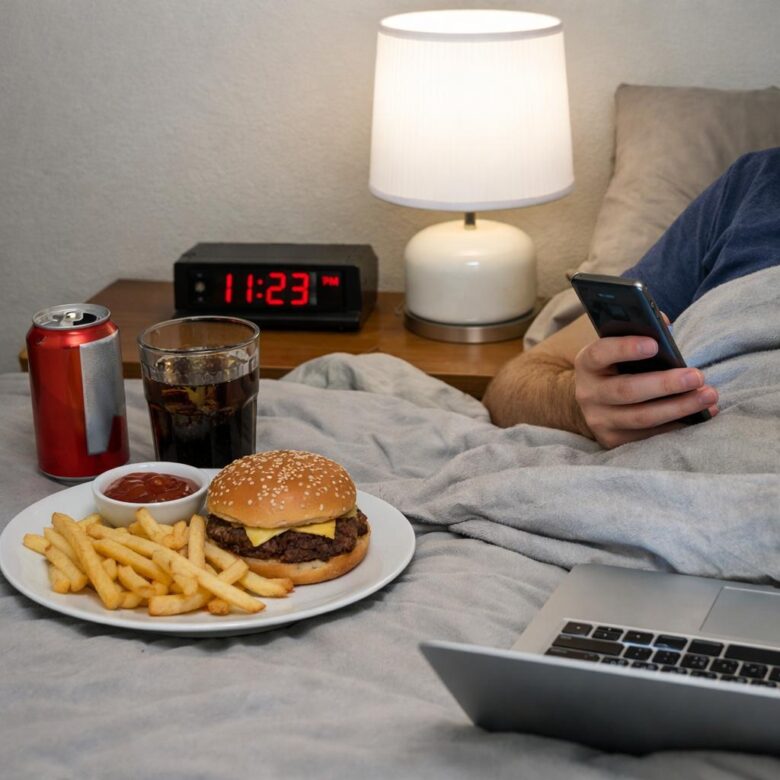
It is easy to blame “bad sleep hygiene” when a night goes poorly. That label is not very useful on its own. A late meal may cause reflux, an afternoon coffee may delay sleepiness, bright evening light may shift the body clock later, and a phone may simply take up the time you planned to spend asleep.
These are different problems. Removing every evening pleasure at once can make bedtime stressful without revealing what actually matters. A better approach is to identify the likely pathway and change one relevant variable.
Use symptoms as clues: fullness, heartburn, or bathroom trips point toward food and drink; feeling alert at the wrong time points toward light or caffeine; and repeatedly missing bedtime points toward device content, notifications, or time displacement.
Comfort and stimulation
Meal size, reflux, caffeine, alcohol, hunger, and fluid intake may affect how easily or continuously you sleep.
Timing of alertness
Light and darkness help synchronize circadian rhythms, including the daily timing of sleepiness and wakefulness.
Light plus behavior
A device combines display light with engaging content, alerts, work demands, and the ability to postpone bedtime indefinitely.
Food affects sleep mainly through what it contains and how it feels
No ordinary food reliably produces sleep on demand. The useful distinction is not “sleep foods” versus “bad foods,” but whether an evening choice creates stimulation, digestive discomfort, thirst, hunger, or repeated awakenings.
Large meals and nighttime reflux
A large meal close to lying down can leave some people uncomfortably full. For people with nighttime gastroesophageal reflux, the National Institute of Diabetes and Digestive and Kidney Diseases notes that eating meals at least three hours before lying down may improve symptoms.
That three-hour interval is reflux guidance, not a universal rule that everyone must follow. Meal size, symptoms, work schedules, diabetes management, pregnancy, and other health needs can change what is practical.
Caffeine timing is more important than the name of the drink
Caffeine is found in more than coffee. Tea, cola, energy drinks, chocolate, pre-workout products, supplements, and some medicines may contain it. Its effects can persist for hours, while individual sensitivity varies considerably.
If you feel tired but not sleepy at bedtime, review the amount and timing of every caffeine source rather than focusing only on your morning coffee.
Alcohol-related drowsiness is not the same as restorative sleep
Alcohol may make a person feel sleepy initially, but it can contribute to lighter, more interrupted sleep later. It may also worsen snoring or breathing problems in susceptible people.
Alcohol can intensify trazodone side effects. Anyone taking trazodone or another sedating medicine should ask the prescribing clinician or pharmacist about alcohol rather than assuming that a particular amount is safe.
Hunger, fluids, and bathroom trips matter too
Going to bed very hungry can be distracting, while drinking a large amount near bedtime may increase awakenings to urinate. A small snack is not automatically harmful when genuine hunger is the problem.
People with diabetes, kidney or heart conditions, swallowing problems, digestive disease, or medically directed fluid limits need individualized guidance rather than a general bedtime eating rule.
Light affects when the body expects activity and rest
Circadian rhythms follow an approximately 24-hour cycle. Light and darkness are their strongest environmental signals, although activity, meals, stress, temperature, and social schedules also contribute.
The pattern across the whole day matters. Bright daytime light supports an alert waking period and helps provide contrast with night. Bright artificial light late in the evening can delay the biological preparation for sleep, particularly when exposure is intense, prolonged, or close to the eyes.
Think in terms of contrast, not complete darkness
A practical pattern for a daytime schedule is brighter light during the waking day and softer light during the wind-down period. This might mean spending time outdoors during the day, then reducing unnecessary overhead lighting and bright displays later.
Safety comes first. A person at risk of falling may need a dim night-light, and complete darkness may not be appropriate for every household.
The timing of light is not interchangeable
Morning, afternoon, and evening light can affect circadian timing differently. This is why timed light therapy for a circadian rhythm disorder is more specific than simply buying a bright lamp. People with a markedly delayed schedule, bipolar disorder, significant eye disease, or medication-related light sensitivity should discuss formal light therapy with a qualified healthcare professional.
A better screen audit: clock, content, and contact
Display color receives much of the attention, but screen-related sleep loss often has several causes at once. Ask three questions before deciding that blue light is the entire problem.
1. Clock
Did the device push bedtime later? Endless feeds, autoplay, and “one more episode” can remove sleep opportunity even if the display is dim.
2. Content
Was the activity calming or activating? Work, arguments, upsetting news, gaming, and symptom searches may maintain mental alertness.
3. Contact
Did messages, vibrations, or anticipated replies keep the device psychologically active? Nonessential alerts can disturb both wind-down time and sleep.
Laboratory research shows that prolonged evening exposure to light-emitting devices can delay melatonin timing and reduce next-morning alertness under some conditions. Real-world effects vary because brightness, distance, duration, daytime light exposure, content, and personal sensitivity are not the same for everyone.
Night mode may reduce some short-wavelength light, but it does not prevent delayed bedtime or stimulating content. Evidence that blue-light-filtering glasses improve adult sleep is uncertain, so they should not replace simpler measures such as reducing brightness, shortening use, silencing alerts, or setting a stopping point.
Match the response to the pattern
| What you notice | Likely pathway to examine | Focused change to test |
|---|---|---|
| Fullness, heartburn, sour taste, or coughing after lying down | Meal size, meal timing, or reflux | Record when symptoms occur and discuss frequent nighttime reflux with a healthcare professional. |
| Tired during the day but unexpectedly alert at bedtime | Caffeine timing, evening light, or an irregular schedule | Review hidden caffeine sources and compare daytime versus evening light exposure. |
| Bedtime keeps moving later | Screen-related time displacement | Use an end-of-evening alarm and stop at a natural break before starting another item. |
| Your mind remains busy after putting the phone down | Emotionally or mentally activating content | Replace the most stimulating activity, not necessarily every form of technology. |
| You wake to sounds, vibrations, or illuminated alerts | Device interruptions | Allow priority contacts while silencing nonessential work, social, shopping, and news alerts. |
| You wake repeatedly to urinate | Fluid timing or a health condition | Note evening intake and seek medical advice if the problem is frequent or new. |
Run a one-variable sleep audit
A short diary is more informative than changing meals, lighting, caffeine, and screens on the same night. It cannot diagnose a sleep disorder, but it can reveal patterns worth keeping or discussing at an appointment.
- Choose one repeated obstacle. Examples include reflux, late caffeine, bright room lighting, open-ended scrolling, or overnight notifications.
- Record a baseline. For several ordinary nights, note bedtime, wake time, the suspected exposure, awakenings, and daytime sleepiness.
- Make one practical adjustment. Keep the rest of the routine reasonably similar so the comparison remains useful.
- Judge function, not a perfect score. Consider ease of falling asleep, awakenings, morning alertness, and daytime functioning. Consumer trackers estimate sleep but cannot prove what caused a poor night.
- Keep only useful changes. A habit that creates anxiety or is impossible to maintain is unlikely to be a good long-term solution.
Shift workers should organize signals around their actual sleep period
Conventional advice about bright mornings and dim evenings assumes nighttime sleep. A night worker may need brighter light during work and reduced light while traveling home and preparing for daytime sleep. Caffeine, meals, screens, household noise, and bedroom darkness should be considered relative to the planned sleep period, not the clock time.
When the problem needs more than habit changes
Arrange a medical evaluation if sleep difficulty is persistent, significantly affects daily functioning, or occurs with:
- Loud snoring, choking, gasping, or observed breathing pauses
- Severe sleepiness, unintentional dozing, or difficulty staying awake while driving
- Frequent nighttime reflux, chest discomfort, trouble swallowing, or regurgitation
- A major change in sleep after a medication or dose change
- Regularly needing alcohol or another substance to become sleepy
- Anxiety, depression, agitation, or emotional distress that interferes with daily life
Do not start, stop, combine, or change trazodone or another medicine based on sleep-tracking results or this article. Medication questions require guidance from the prescriber or pharmacist familiar with your care.
Frequently asked questions
Must I stop eating exactly three hours before bed?
No single cutoff applies to everyone. Avoiding a heavy meal within the final few hours may improve comfort. A three-hour interval is particularly relevant to people whose reflux symptoms occur while lying down.
Is turning on night mode enough?
Not necessarily. It changes the display spectrum but does not remove brightness, activating content, notifications, or time displacement. Lowering brightness and deciding when and why you are using the device may be more useful.
Do all screens have the same effect?
No. A dim device playing familiar audio on a timer differs from close-up, brightly lit, interactive use. Duration, distance, brightness, content, alerts, and whether the activity delays bedtime all matter.
Can a sleep tracker identify the food or screen that caused poor sleep?
A tracker may help show timing patterns, but it cannot establish that one exposure caused a particular night of sleep or diagnose reflux, insomnia, or sleep apnea.
The useful distinction
Food and drink most often affect sleep through stimulation, digestion, and awakenings. Light provides timing information to the circadian system. Screens combine light with behavior: what you view, who can reach you, and how long you remain awake.
Instead of imposing a long list of restrictions, identify the pathway that best matches the problem. A focused change is easier to evaluate, easier to maintain, and more likely to reveal when professional assessment is needed.
Sources & References
- National Institute of General Medical Sciences — Circadian Rhythms
- National Heart, Lung, and Blood Institute — Healthy Sleep Habits
- National Institute of Diabetes and Digestive and Kidney Diseases — Eating, Diet, and Nutrition for GERD
- Proceedings of the National Academy of Sciences — Evening Use of Light-Emitting Electronic Readers and Sleep
- Cochrane — Blue-Light Filtering Spectacle Lenses and Sleep Quality
- MedlinePlus — Trazodone Drug Information
Learn how this website prepares and updates informational content in our Editorial Policy and Research Methodology.

The Trazodone Insights Editorial Team prepares general educational content about sleep habits, rest, nighttime routines, stress-related sleep topics, and related wellness subjects. The website does not provide individualized medical care.