This checklist is designed to help you identify which everyday factor is most likely interfering with your rest. It is not a demand to follow every popular sleep rule or create a perfect bedtime routine.
Sleep hygiene means arranging your schedule, activities, and surroundings so they support sleep rather than compete with it. Useful habits include allowing enough time for sleep, keeping a reasonably regular schedule, managing caffeine and alcohol, and making the bedroom comfortable.
The limitation is important: sleep hygiene cannot explain every sleep problem. Persistent insomnia, sleep apnea, restless legs syndrome, medication effects, pain, mood symptoms, shift work, and other conditions may continue even when someone follows sensible sleep habits.
Check these three issues before changing anything else
Many sleep plans fail because they address minor details while overlooking a larger obstacle. Start with these questions.
If your schedule permits only five or six hours in bed, new pillows, supplements, and relaxation exercises cannot create the missing sleep opportunity.
A large mismatch between workdays, days off, naps, and bedtime can make sleepiness arrive at inconvenient times.
Gasping, breathing pauses, severe daytime sleepiness, unusual nighttime behavior, or persistent insomnia call for more than a habit checklist.
The practical sleep hygiene checklist
Mark an item only if it happens on most days. The unchecked boxes are possible experiments, not evidence that you are “bad at sleeping.”
My planned bedtime and wake time leave enough opportunity for sleep instead of routinely cutting the night short.
I do not regularly shift my morning schedule by several hours unless work, illness, caregiving, or another necessity requires it.
I spend time outside when practical and include safe daytime movement appropriate for my health and abilities.
I account for coffee, tea, soda, energy products, chocolate, supplements, and caffeine-containing medicines—not just the morning cup.
Alcohol may cause initial drowsiness but can contribute to lighter, interrupted sleep later in the night.
I am not repeatedly going to bed overly full, very hungry, experiencing reflux, or needing frequent bathroom trips because of late fluid intake.
The final part of the evening contains less work, planning, conflict, urgent news, and open-ended scrolling.
I use a timer, Do Not Disturb setting, app limit, or charging location so device use does not continue unintentionally.
I have considered light, unpredictable noise, temperature, mattress comfort, pet interruptions, safety needs, and notifications.
If I nap, I record when and for how long. I notice whether later or longer naps make nighttime sleep more difficult.
Choose the change that matches the problem
Do not automatically select the easiest box to check. Select the change that addresses a repeated pattern you can actually observe.
| Pattern you notice | Useful first experiment | What to record |
|---|---|---|
| You are not sleepy near your intended bedtime. | Stabilize your wake time and review late naps, evening caffeine, and bright or stimulating activity. | Wake time, nap timing, final caffeine, and when sleepiness appeared. |
| You become tired but stay on your phone much longer than intended. | Create a specific stopping cue, silence alerts, and move the most absorbing apps away from the home screen. | Planned stop time versus actual stop time. |
| You wake because of noise, light, heat, or discomfort. | Correct the most frequent environmental interruption rather than redesigning the entire room. | What woke you and approximately how often it happened. |
| You sleep much later on days off. | Test a smaller difference between workday and free-day wake times, if your responsibilities allow it. | Wake times and how sleepy you felt the following evening. |
| You wake for the bathroom or with digestive discomfort. | Review the timing and size of meals, alcohol, and fluids. Persistent symptoms deserve medical discussion. | Meal time, drinks, symptoms, and awakenings. |
| You follow good habits but remain awake or impaired during the day. | Prepare a sleep diary and discuss the pattern with a qualified healthcare professional. | Sleep timing, awakenings, daytime sleepiness, medications, and concerning symptoms. |
Run a seven-night experiment
Changing five habits at once makes it difficult to learn which one mattered. A small experiment produces more useful information.
Choose one repeated obstacle, such as late caffeine or unplanned phone use.
Define a specific action you can measure, such as moving the final coffee one hour earlier.
Keep other parts of your routine reasonably stable for seven nights when practical.
Review the overall pattern rather than judging the experiment by one unusually good or bad night.
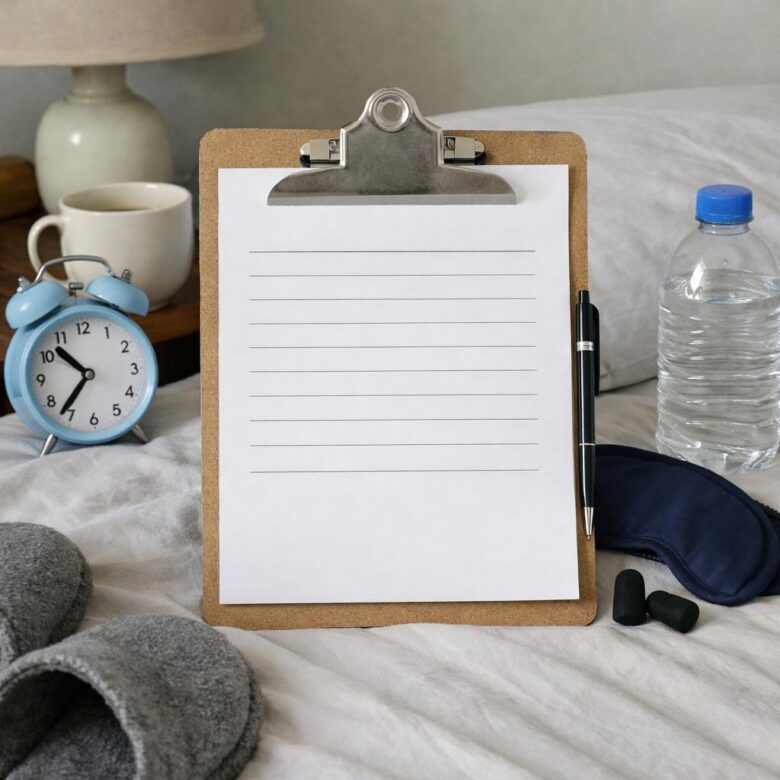
Seven-night observation sheet
Check whether you completed the chosen action. In a separate note, record bedtime, wake time, awakenings, naps, and daytime sleepiness. The goal is pattern recognition—not earning a perfect score.
What this checklist cannot do
Sleep hygiene is a foundation, not a stand-alone treatment for every form of insomnia. Current sleep-medicine guidance favors structured behavioral treatment, particularly cognitive behavioral therapy for insomnia (CBT-I), for chronic insomnia. CBT-I includes more than general advice: it addresses sleep timing, the connection between bed and wakefulness, sleep-related thoughts, and other factors that can maintain insomnia.
Avoid attempting formal sleep-restriction instructions from a generic checklist. That component of CBT-I changes time in bed and may require individual guidance, especially for people with significant daytime sleepiness, fall risk, seizure disorders, bipolar disorder, or safety-sensitive work.
When to move beyond self-help
Arrange a healthcare evaluation when sleep problems are persistent, distressing, or interfere with driving, work, study, relationships, or other daily responsibilities. Important symptoms include:
- Loud snoring with choking, gasping, or witnessed pauses in breathing
- Falling asleep unintentionally or struggling to remain alert while driving
- Repeated difficulty falling asleep, staying asleep, or waking earlier than intended despite adequate opportunity for sleep
- Uncomfortable leg sensations that become worse during rest
- Unusual movements, dream enactment, wandering, or injuries during sleep
- New sleep problems after a medication or dosage change
- Sleep disruption associated with significant anxiety, depression, elevated mood, pain, breathing symptoms, or other health changes
If you are dangerously sleepy while driving, stop driving and prioritize immediate safety. Do not start, stop, increase, decrease, or combine trazodone or any other medication because of information in this article. Medication questions should be discussed with the prescriber or pharmacist responsible for your care.
Questions to prepare for an appointment
- When did the sleep problem begin, and how many nights per week does it occur?
- Is there enough time available for sleep?
- What are the usual bedtimes, wake times, naps, caffeine use, and alcohol use?
- Are snoring, gasping, leg discomfort, unusual movements, or morning headaches present?
- How does the problem affect concentration, mood, work, or driving?
- Could a medication, supplement, health condition, work schedule, or hormonal change be contributing?
- Would a structured insomnia treatment such as CBT-I be appropriate?
Use the checklist as an investigation, not a test
Begin with the largest observable barrier, choose one measurable change, and review at least several nights together. If the habit improves comfort or consistency, keep it. If it makes no meaningful difference, that is still useful information.
Persistent difficulty despite adequate sleep opportunity and reasonable habits is not a personal failure. It is a reason to look beyond sleep hygiene and consider a more complete evaluation.
Sources & References
- National Heart, Lung, and Blood Institute — Insomnia Treatment
- National Heart, Lung, and Blood Institute — Insomnia Diagnosis and Sleep Diaries
- Centers for Disease Control and Prevention — About Sleep
- U.S. Department of Veterans Affairs and Department of Defense — 2025 Guideline for Chronic Insomnia and Obstructive Sleep Apnea
- U.S. Food and Drug Administration — Caffeine Sources, Sensitivity, and Safety
Learn how this website prepares and updates informational content in our Editorial Policy and Research Methodology.

The Trazodone Insights Editorial Team prepares general educational content about sleep habits, rest, nighttime routines, stress-related sleep topics, and related wellness subjects. The website does not provide individualized medical care.