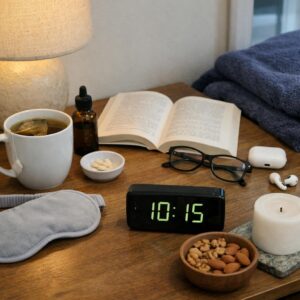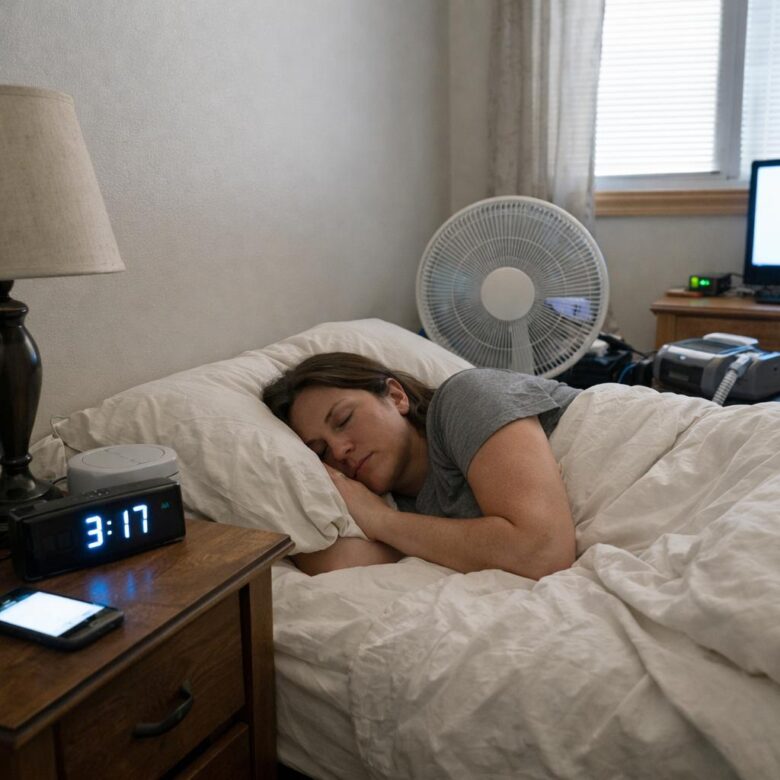
This guide focuses on a specific question: is something in your bedroom repeatedly interrupting sleep? Use it to identify environmental problems before buying new equipment or assuming the room is the only cause.
A bedroom cannot make sleep happen on command. It can, however, expose you to light, sudden sound, trapped heat, uncomfortable support, breathing irritants, notifications, or safety concerns throughout the night. Some disruptions are obvious; others become noticeable only after you compare several nights.
The useful goal is not a “perfect” bedroom. It is a room that is dark and quiet enough, comfortably cool, physically supportive, reasonably clean, and safe for the person using it. Individual needs vary with climate, housing, health, mobility, work schedule, and sensory preferences.
Identify what happens immediately before an awakening or discomfort.
Avoid changing the curtains, bedding, sound, and temperature together.
Do not block alarms, exits, caregiving alerts, or safe nighttime movement.
Persistent symptoms may require medical or building-related evaluation.
What to examine from the bed itself
Light: look for direction, timing, and purpose
Darkness supports the normal nighttime sleep environment, while bright or attention-grabbing light can make a room feel active. Check streetlights, sunrise, hallway light, television indicators, charging devices, clocks, and notifications from your usual sleeping position.
Covering one display, turning a clock away, repositioning a charger, using an eye mask, or adding room-darkening curtains may be enough. Complete darkness is not appropriate when a person needs a dim night-light to reduce fall risk or reach a bathroom safely.
Noise: steady sound and sudden sound are different problems
A constant low sound may be easy to ignore, while doors, vehicles, plumbing, pets, televisions, and vibrating phones can repeatedly attract attention. Listen during the hours when you normally sleep rather than relying on a daytime inspection.
Start by stopping preventable noise: silence nonessential alerts, stabilize rattling objects, move a vibrating phone off hollow furniture, and discuss household noise where practical. A fan, moderate background sound, or comfortable earplugs may help mask irregular noise, but essential alarms and caregiving alerts must remain detectable.
Temperature: change the bed before rebuilding the room
Sleep guidance commonly recommends a cool, comfortable bedroom, but there is no single temperature that suits every body, climate, medical condition, or bedding system. The problem may be the room itself, or it may be heat retained by pajamas, blankets, a mattress topper, or limited airflow.
If you wake hot, sweaty, chilled, or repeatedly adjusting the covers, change one layer at a time. Safe airflow, lighter bedding, different sleep clothing, or daytime window shading may solve the problem without specialized cooling equipment.
Bedding: locate discomfort before replacing anything
A pillow, mattress, frame, or heavy bedding may contribute when you wake with pressure, stiffness, numbness, overheating, or difficulty changing position. Price and marketing language do not establish whether a product is suitable for a particular person.
Check for sagging, broken supports, uneven surfaces, lost pillow shape, and bedding that restricts movement. Note where discomfort begins and whether it changes with another pillow, position, or sleeping location. Persistent or worsening pain should not be attributed automatically to the mattress.
Air and moisture: control the source first
Smoke, fragrance, dust, pollen, pet allergens, pests, and dampness may contribute to congestion, coughing, eye irritation, or breathing discomfort in sensitive people. Visible mold or a recurring musty odor points to a moisture problem that needs attention.
U.S. Environmental Protection Agency guidance emphasizes source control, appropriate ventilation, and moisture management before relying on filtration. A suitable air cleaner may reduce some airborne particles, but it cannot repair a leak, remove every pollutant, or correct inadequate ventilation. Avoid ozone-generating devices in occupied rooms.
A 15-minute nighttime room audit
Perform this check under the conditions in which you normally try to sleep.
Turn off the main light. Identify window light, glowing electronics, and obstacles on the route to the door or bathroom.
Listen for traffic, plumbing, televisions, pets, appliances, notifications, and furniture that amplifies vibration.
Check airflow, bedding weight, pillow shape, mattress support, drafts, heat sources, and ease of movement.
Look for moisture, odors, visible mold, dust buildup, blocked vents, smoke sources, and working safety alarms.
Match the observation to a sensible first test
| What you notice | What it may suggest | Low-cost first test |
|---|---|---|
| You become alert after checking the time. | Clock light, time-monitoring, or nearby phone content may be increasing alertness. | Turn the display away and place the phone out of immediate reach. |
| You remove covers or wake sweaty. | Bedding, clothing, airflow, or the room may be retaining too much heat. | Remove one layer for several nights before buying cooling equipment. |
| You wake after doors, traffic, or plumbing sounds. | Sudden noise may be interrupting sleep. | Reduce the source or test moderate steady sound without blocking alarms. |
| You wake congested or with irritated eyes. | An allergen, smoke, fragrance, dampness, or another irritant may be present. | Inspect for sources and moisture; seek medical or housing help if symptoms persist. |
| You wake with pain or numbness. | Position or bedding may contribute, but an underlying health issue is also possible. | Check the pillow, mattress, and frame; obtain medical advice for persistent symptoms. |
| You sleep poorly in several different rooms. | The bedroom may not be the main cause. | Record symptoms and discuss ongoing sleep difficulty with a healthcare professional. |
A controlled three-night test
Choose the most likely environmental problem and change only that factor for three nights when practical. Record bedtime, estimated awakenings, physical comfort, and daytime sleepiness. This is not a diagnostic test; it is a way to avoid guessing or making several expensive changes at once.
- Use the same change each night.
- Do not rely only on a sleep-tracker score.
- Keep anything that clearly improves comfort.
- Stop changes that create a safety problem.
- Try a different variable if there is no consistent benefit.
- Seek help rather than testing indefinitely.
Bedroom safety is part of the sleep environment
Keep exits and walking routes clear. Test smoke and carbon monoxide alarms according to their instructions, and do not use earplugs or sound masking in a way that prevents you from detecting essential alarms.
Carbon monoxide has no color or odor. If an alarm sounds, or several people in the home develop sudden headache, dizziness, weakness, nausea, chest pain, or confusion, leave the building for fresh air and contact emergency services. Do not treat repeated morning headaches as merely a comfort problem when a combustion source could be involved.
Signs that rearranging the room is not enough
Contact a qualified healthcare professional about symptoms such as:
- Loud, frequent snoring with gasping, choking, or witnessed breathing pauses
- Severe daytime sleepiness, unintended sleep episodes, or drowsy driving
- Ongoing difficulty falling asleep or staying asleep despite adequate opportunity
- Persistent morning headaches, pain, numbness, coughing, reflux, or breathing irritation
- Uncomfortable leg sensations or repeated unusual movements during sleep
- A major sleep change after starting or changing a medication
Bedroom observations cannot diagnose insomnia, sleep apnea, an allergy, or a medication effect. Do not start, stop, combine, increase, decrease, or change the timing of trazodone or another prescribed medicine based on a room experiment.
Frequently asked questions
Does a bedroom need to be completely dark?
Unnecessary light should be reduced, but safety takes priority. A dim night-light may be appropriate for someone who needs to move around at night or has a higher risk of falling.
Is white noise always helpful?
No. It may mask irregular sounds for some people and distract others. Use a moderate volume, place the source away from the head, and make sure essential alarms remain audible.
Will an air purifier solve bedroom allergies?
A properly selected and maintained cleaner may reduce certain airborne particles. It will not eliminate every allergen or correct smoke, moisture, hidden mold, leaks, or inadequate ventilation.
When should a mattress be replaced?
There is no universal deadline. Consider visible damage, loss of support, cleanliness, comfort, and whether symptoms change on another suitable surface.
What is different for daytime sleepers?
Daytime sleepers may face stronger light, traffic, deliveries, construction, and household activity. Room-darkening coverings, controlled alerts, household planning, and safe sound masking may therefore be especially important.
The practical takeaway
Start with the environmental problem you can observe most clearly. Correct one unnecessary light, sound, heat source, comfort issue, or pollutant source and watch for a repeatable difference. Spend money only when a specific problem requires a specific tool.
If poor sleep continues across different environments—or includes breathing pauses, dangerous sleepiness, persistent insomnia, pain, or respiratory symptoms—the next step is professional evaluation, not endless bedroom redesign.
Sources & References
- National Heart, Lung, and Blood Institute — Healthy Sleep Habits
- CDC/NIOSH — Improve Sleep: Tips to Improve Your Sleep When Times Are Tough
- U.S. Environmental Protection Agency — Improving Indoor Air Quality
- U.S. Environmental Protection Agency — Guide to Air Cleaners in the Home
- U.S. Consumer Product Safety Commission — Carbon Monoxide Alarms
- National Heart, Lung, and Blood Institute — Sleep Apnea Symptoms
Learn how this website prepares and updates informational content in our Editorial Policy and Research Methodology.

The Trazodone Insights Editorial Team prepares general educational content about sleep habits, rest, nighttime routines, stress-related sleep topics, and related wellness subjects. The website does not provide individualized medical care.