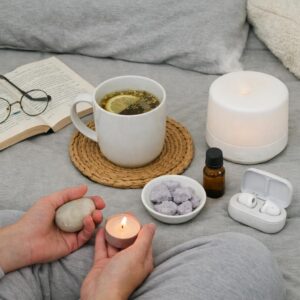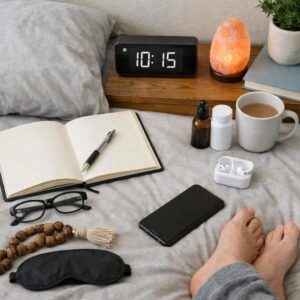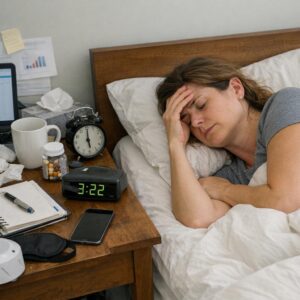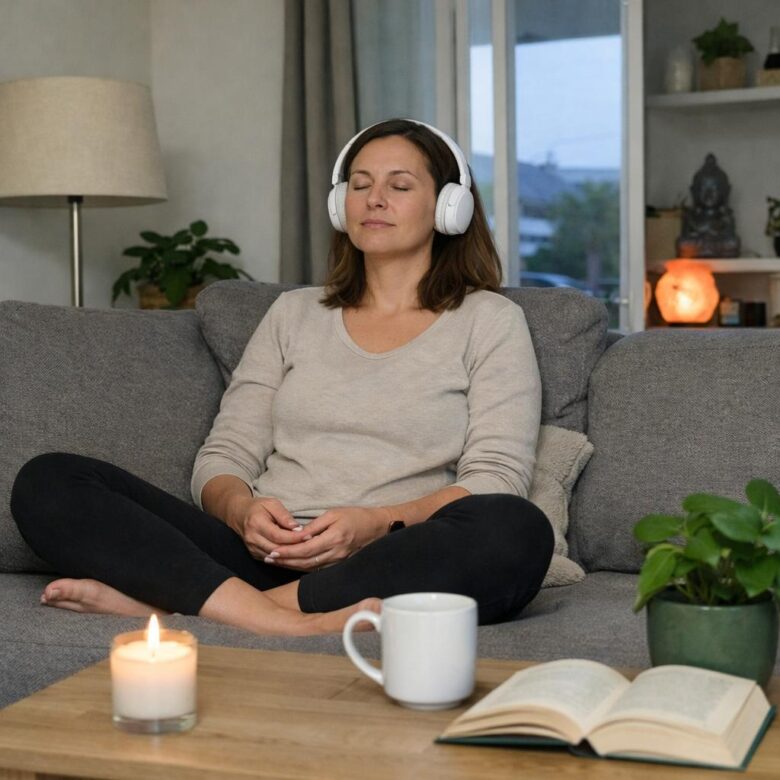
This guide focuses on the first part of the evening: the transition out of a demanding day. The goal is not to force yourself into a perfectly calm mood or build another bedtime routine. It is to stop carrying every unfinished task, conversation, and alert into the hours that follow.
A stressful day can be over while your stress response remains active. You may continue rehearsing a disagreement, checking for new requests, clenching your jaw, rushing through dinner, or feeling too restless to enjoy anything. Stress can affect emotions, concentration, sleep, appetite, energy, and the body, so “just relax” is rarely a useful instruction.
A better starting point is to identify what is keeping you activated. An unfinished task needs a boundary or plan. Physical agitation may respond better to movement. Hunger and exhaustion require practical care. Emotional distress may call for support rather than another self-help exercise.
Use a lower-pressure target: aim to become less activated and more able to choose what happens next. You do not have to eliminate every thought or feeling for an evening reset to be useful.
First, identify the kind of stress you are carrying
Your mind is still working
Signs include mentally drafting emails, rehearsing conversations, repeatedly reviewing mistakes, or trying to remember everything that must happen tomorrow. A written “parking place” for unfinished business is usually more relevant than a body-focused exercise.
Your body is still braced
You may notice shallow or rapid breathing, tight shoulders, jaw tension, pacing, fidgeting, or an urge to keep moving. Comfortable physical activity or muscle release may feel more natural than immediate stillness.
Your basic needs are overdue
Stress is harder to interpret when you are hungry, thirsty, overheated, uncomfortable, in pain, or severely tired. Addressing a practical need is not avoiding the emotional issue; it can make the issue easier to evaluate.
The stressor is still happening
Relaxation alone cannot resolve an unsafe home, harassment, an urgent caregiving problem, a medical concern, or work demands that continue throughout the evening. In these situations, safety, boundaries, documentation, and appropriate support come first.
A 12-minute transition when you have little energy
Use this as a sequence, not a performance test. Skip or adapt any step that is uncomfortable or unsuitable for your health or circumstances.
End the input. Close work, silence nonessential alerts, and move away from the place where the stressful activity occurred.
Check the body. Notice hunger, thirst, pain, temperature, clothing discomfort, bathroom needs, and fatigue.
Contain unfinished work. Write the concern, the next action, and when you will review it.
Choose one regulator: walking, stretching, slow breathing, familiar music, grounding, or brief contact with someone supportive.
Five tools for changing gears without forcing calm
Create a visible stopping point
Remote work, caregiving, studying, and household responsibilities often have no obvious ending. Use a concrete action to separate the demanding period from what follows: put materials away, change clothes, wash up, turn off a work device, or walk around the block.
Turn mental reminders into a return plan
A long list of worries can increase pressure. Instead, record only what you need to re-enter the issue later:
- Concern: What remains unfinished?
- Next action: What is the first concrete step?
- Return time: When will you look at it again?
“Prepare three questions for the 9 a.m. meeting” gives the mind a clearer endpoint than “solve the project tonight.”
Match movement to your energy level
Physical activity can support emotional well-being, and even small amounts may be worthwhile. After a highly stimulating day, however, movement does not need to become an intense workout. Walking, gentle stretching, gardening, tidying one area, or another comfortable activity may provide a transition.
Use relaxation as an option, not an obligation
Relaxation methods include progressive muscle relaxation, guided imagery, meditation, and slow breathing. These practices are intended to encourage a relaxation response, but no single method works comfortably for everyone.
If you try breathing, avoid straining for an unusually large breath. Let your breathing remain comfortable and allow the exhale to slow slightly. If inward attention, closed eyes, or controlled breathing increases distress, stop and use an eyes-open activity such as walking, naming objects in the room, or listening to familiar audio.
Ask for the kind of support you need
Contact with a trusted person can help, but unclear conversations sometimes create more frustration. State whether you want listening, advice, distraction, company, or practical help.
Common responses that may quietly prolong the workday
| Automatic response | What can go wrong | Try instead |
|---|---|---|
| Checking work “one last time” | A new message can restart problem-solving and create another open loop. | Choose a definite final check time and silence nonurgent work alerts afterward. |
| Scrolling until you feel different | Open-ended feeds can add upsetting news, comparison, arguments, and more decisions. | Select one program, article, playlist, or activity with a clear ending. |
| Replaying the entire day | Reflection can become rumination without producing a useful next step. | Write one lesson or action, then postpone further review to a planned time. |
| Forcing silent meditation | Stillness or inward focus may increase agitation for some people. | Use walking, music, a simple hands-on task, or eyes-open grounding. |
| Using alcohol as a calming tool | Alcohol can impair judgment, disturb sleep later, and worsen the effects of some medicines. | Choose a nonalcoholic transition and ask a pharmacist or prescriber about medication interactions. |
| Demanding immediate relief | Monitoring yourself for perfect calm can create another source of pressure. | Ask whether you are slightly less reactive or better able to choose your next action. |
If you take trazodone: do not change its dose, timing, or frequency because a stressful day is making it difficult to unwind. Trazodone can cause drowsiness and affect judgment or coordination, and alcohol can worsen its side effects. Questions about missed doses, side effects, supplements, alcohol, or other medicines belong with your prescriber or pharmacist.
Questions to prepare when stress keeps disrupting daily life
A short record can make a healthcare or mental-health appointment more productive. Consider noting:
- When the symptoms began and whether there was a clear trigger
- How often they occur and how long they tend to last
- Effects on sleep, appetite, concentration, work, relationships, or driving
- Physical symptoms such as palpitations, pain, breathlessness, dizziness, or stomach problems
- Alcohol, caffeine, cannabis, supplements, and all prescription or nonprescription medicines used
- Any recent medication, dose, health, work, or life changes
- Which coping methods help, do nothing, or make the symptoms worse
When an evening reset is not enough
Consider professional support when distress is persistent, worsening, difficult to control, or interfering with ordinary responsibilities. This is particularly important if worry or dread remains present without a clear immediate threat, you begin avoiding important activities, sleep disruption is frequent, or alcohol and other substances are becoming a primary coping method.
Prompt medical assessment is also appropriate for new or unexplained physical symptoms, symptoms following a medication change, repeated panic-like episodes, unusually elevated energy with little need for sleep, severe mood changes, or significant daytime impairment.
Get immediate help when safety is at risk
In the United States, call or text 988 for the 988 Suicide & Crisis Lifeline if you are in emotional crisis, thinking about suicide or self-harm, or worried that someone may not remain safe. Call 911 for a medical emergency, including severe breathing difficulty, chest pain, fainting, sudden confusion, a suspected overdose, or loss of consciousness.
A realistic endpoint for the day
You do not need to finish every task, resolve every emotion, or become completely peaceful before the evening can begin. Close the source of incoming demands, meet one immediate physical need, give unfinished work a return plan, and choose one response that matches your current state.
If the same level of distress follows you home most days, treat that pattern as useful information rather than a personal failure. A calming technique may help with a difficult evening, but recurring or severe symptoms deserve a broader look at workload, health, medication effects, mental health, safety, and available support.
Sources & References
- Centers for Disease Control and Prevention — Managing Stress
- National Institute of Mental Health — I’m So Stressed Out!
- National Center for Complementary and Integrative Health — Relaxation Techniques: What You Need To Know
- MedlinePlus — Trazodone Drug Information
- 988 Suicide & Crisis Lifeline — What to Expect When You Call, Text, or Chat
Learn how this website prepares and updates informational content in our Editorial Policy and Research Methodology.

The Trazodone Insights Editorial Team prepares general educational content about sleep habits, rest, nighttime routines, stress-related sleep topics, and related wellness subjects. The website does not provide individualized medical care.