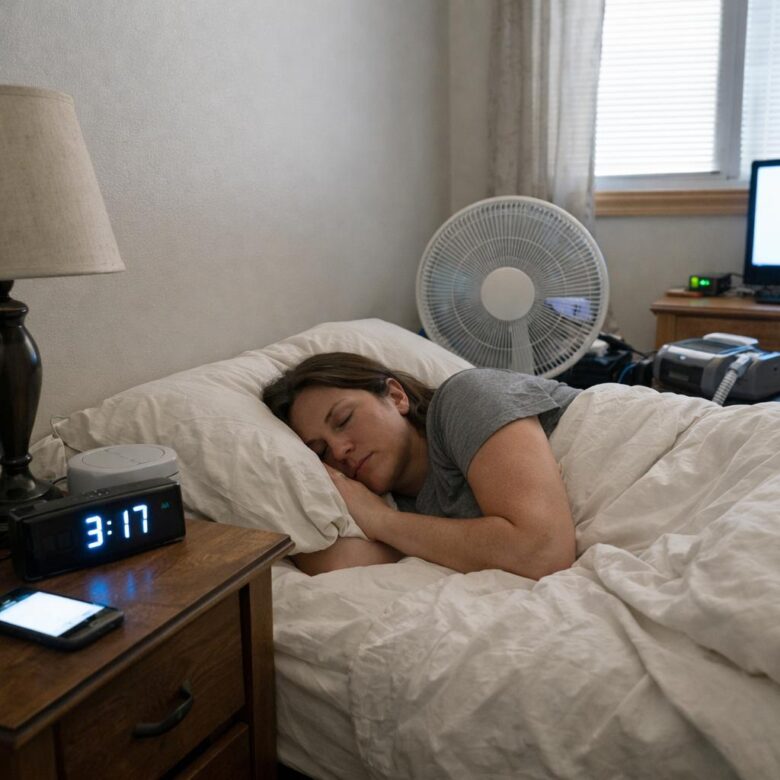
What if your bedroom is quietly sabotaging your sleep every night?
The temperature, light, noise, air quality, mattress, and even clutter around you can signal your brain to stay alert when it should be powering down.
Sleep is not controlled by willpower alone. Your bedroom environment shapes your body’s internal clock, stress response, and ability to move into deep, restorative rest.
By understanding how your surroundings affect sleep, you can turn your bedroom from a place where you struggle to rest into one that helps your body fall asleep faster and wake up better.
How Your Bedroom Environment Influences Sleep Quality and Circadian Rhythm
Your bedroom quietly trains your body when to feel alert and when to wind down. Light, temperature, noise, mattress comfort, and air quality all affect melatonin production and your circadian rhythm-the internal clock that controls sleep timing, energy, and morning alertness.
Light is usually the biggest disruptor. A bright phone screen, hallway light, or streetlamp leaking through curtains can delay sleep even when you feel tired. If you use a sleep tracker like Oura Ring or Fitbit, you may notice more restless sleep on nights when you scroll in bed or leave lights on too late.
Small bedroom upgrades can make a real difference without turning your room into a luxury hotel:
- Blackout curtains or a sleep mask help reduce artificial light exposure.
- A smart thermostat can keep the room cooler and more consistent overnight.
- A white noise machine or air purifier can reduce sudden sounds and improve comfort.
In real homes, the issue is often not one big problem but several small ones. For example, someone may buy an expensive mattress but still sleep poorly because the room is too warm, the air feels dry, and a charging phone lights up the nightstand every few minutes.
The best approach is to treat your bedroom like a sleep system. Keep it dark, cool, quiet, and uncluttered, then review what changes actually improve your sleep quality. This helps you spend money wisely on bedroom products and sleep technology that solve the right problem.
How to Optimize Light, Noise, Temperature, and Bedding for Better Sleep
Start with light control because it is one of the easiest bedroom upgrades with a clear payoff. Use blackout curtains, a sleep mask, or smart bulbs like Philips Hue to dim warm light at least an hour before bed, especially if streetlights or phone screens keep your room bright. A simple rule: if you can clearly see objects across the room, it may be too bright for quality sleep.
For noise, focus on consistency rather than total silence. A white noise machine, fan, or app can help mask traffic, neighbors, or a partner’s different schedule; in apartments, I’ve seen people sleep better simply by placing a sound machine near the door instead of beside the bed. If noise is unpredictable, consider soft earplugs plus a steady background sound.
- Temperature: Keep the room cool, usually around 60-67°F, and use a smart thermostat such as Google Nest to lower the temperature automatically at night.
- Bedding: Choose breathable sheets, a supportive pillow, and a mattress that matches your sleep position; hot sleepers may benefit from a cooling mattress topper or moisture-wicking bedding.
- Maintenance: Wash sheets weekly and replace worn pillows, since allergens, dust mites, and poor neck support can quietly disrupt sleep.
Small changes often work better than expensive ones. Before buying a new mattress, try adjusting room temperature, blocking light leaks, and upgrading your pillow first. These low-cost sleep environment improvements can make your bedroom feel calmer, cleaner, and more comfortable every night.
Common Bedroom Setup Mistakes That Disrupt Sleep Every Night
One of the most common mistakes is treating the bedroom like a multi-purpose room. Working from bed, scrolling on your phone, or keeping a bright TV opposite your pillow trains your brain to stay alert instead of winding down. A simple fix is to move chargers across the room and use a sunrise alarm or sleep tracker like Google Nest Hub to monitor patterns without keeping your phone beside you.
Poor temperature control is another quiet sleep killer. A room that feels fine at bedtime can become too warm after a few hours, especially with memory foam mattresses, heavy comforters, or poor airflow. If you wake up sweaty or restless, consider breathable bedding, a smart thermostat, or an HVAC inspection before blaming stress or insomnia.
- Wrong mattress support: A sagging mattress can increase pressure points and back discomfort, especially for side sleepers.
- Light leaks: Streetlights, alarm clocks, and hallway light can interfere with deeper rest; blackout curtains are often worth the cost.
- Hidden noise: A humming mini fridge, loud air purifier, or traffic noise can cause repeated micro-wakeups.
In real homes, the issue is often a combination. For example, a couple may buy an expensive mattress but keep thin curtains, a glowing router, and a warm bedroom, then wonder why sleep quality does not improve. Fix the room in layers: darkness, cooling, noise control, then comfort upgrades like pillows, mattress toppers, or an adjustable bed base.
Wrapping Up: How Bedroom Environment Affects Your Sleep Every Night Insights
Your bedroom should work as a nightly signal that tells your body it is safe to rest. If sleep feels inconsistent, start with the factors you can control most easily: reduce light, quiet disruptive noise, keep the room comfortably cool, and choose bedding that supports your body without trapping heat.
Practical takeaway: change one element at a time and notice how your sleep responds over several nights. The best bedroom environment is not the most expensive or stylish one-it is the one that helps you fall asleep faster, stay asleep longer, and wake up feeling restored.

Dr. Alistair Thorne is a Clinical Neuroscientist and Sleep Health Consultant specializing in the intersection of circadian rhythms and mental resilience. He provides evidence-based guidance on nightly routines and pharmacological education to help individuals achieve peak cognitive performance through restorative sleep.